Where are full-backs born?
Full-backs used to come straight from the factory: shaped from childhood for a closed role, with its own movements and its own profile. Now they are scarce, and the flank fills up with midfielders who have more touch and a better reading of the game than a defender who only shuts his lane.






Few things worry a manager more than one of his full-backs catching a cold, whichever flank it is. It is the hardest position to cover because almost no footballer chooses it: in a sport that hands out the spotlight elsewhere, that strip of grass looks like a second-rate destination. Kids dream of being the winger who settles a match in a flash, or the striker who cashes in the collective effort of his team-mates. Others picture themselves as the towering figure who marshals the back line, the classy pivot who moves the team by swinging the ball from side to side, or that midfielder who believes he can play without running. The wide defender, by contrast, was moulded in the academy: a post of fixed routines, of measured runs up and down, with a very specific profile. At school, the full-back was the kid who passed maths.
At school, the full-back was the kid who passed maths.
But the paradigm has shifted, even if for many it is still the ugliest job in the trade. The shortage of good full-backs and the evolution of the role have pushed footballers who used to be raised in midfield out towards the touchline. There were wing-backs of enormous talent before, such as Marcelo or Dani Alves, but they were rarely considered indispensable: they were an ornament, not the axis of the plan. Trent Alexander-Arnold changed that. He made the world fall in love with him by playing inside despite starting out wide, and the Premier League surrendered at his feet once it understood that the Englishman was a key piece in Jürgen Klopp's system.
In that Liverpool, the two full-backs were two different answers to the same question. Andy Robertson worked to perfection as a conventional wide defender: up and down, glued to the touchline, with a left foot that delivered measured crosses and barely a right one to speak of. Trent was something else. He drifted infield, demanded the ball, switched play and broke lines with a single pass; when nobody knew who to give it to, it ended up with him. Both shone at the same time. In 2018/19 Trent provided 12 Premier League assists, a record for a defender, with the Scot right behind him on 11. A year later he broke his own mark with 13, and in the whole league only Kevin De Bruyne set up more (Guinness World Records). In 2019 he lifted the Champions League at the Metropolitano and finished 19th in the Ballon d'Or, the highest placing of his career. And by February 2024 he was already the defender who had created the most goals in the competition's history: 58, one more than Robertson.
With a profile like that, the temptation was obvious: if he thinks like a midfielder, let him play as a midfielder. But whenever he was moved into the engine room, with England or with Liverpool, he never quite became as decisive. Gareth Southgate used him in central midfield at Euro 2024, against Serbia and Denmark, and the experiment did not work. Klopp had warned about it back in September 2021, when the England manager first tried him there: "Why would you make the best right-back in the world a midfielder?". Even when the German brought him closer to the middle, in spring 2023, Trent started from the flank and moved inside with the ball. Perhaps that really was his position. Trent was a modern right-back, different, ahead of his time; but a full-back all the same. What made him unique was born precisely there: from the right, with the whole pitch in front of him.
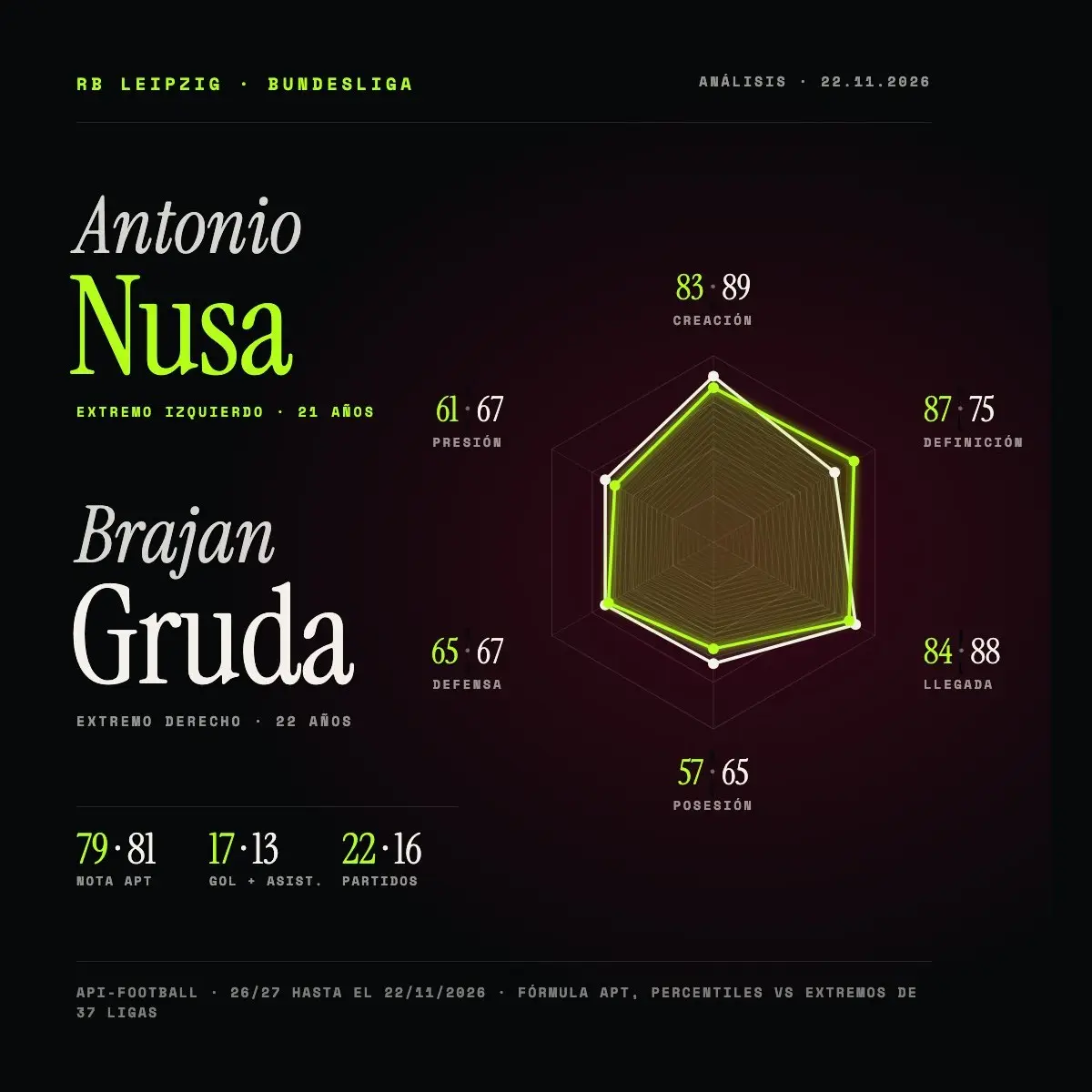
Today, the conversion of midfielders and centre-backs into players who start at full-back is advancing at an exponential rate. Pep Guardiola was a pioneer in pushing defenders out wide: Joško Gvardiol arrived from Leipzig to play in the heart of the defence and in his first season at City made the left flank his own. With João Cancelo he took the opposite journey: at Juventus he overlapped on the outside, and in Manchester he learned to tuck inside, next to Rodri, like an extra central player. The latest piece is Nico O'Reilly, an academy holding midfielder who won the left-back spot and, with it, his first England call-up in October 2025.
Mikel Arteta, who learned the coaching trade at his side, repeats the recipe at Arsenal. Jurriën Timber was a centre-back in Ten Hag's Ajax; Riccardo Calafiori, in Thiago Motta's Bologna. And Myles Lewis-Skelly grew up as a midfielder at Hale End until Arteta moved him to left-back in 2024: months later, in March 2025, he scored against Albania on his first England appearance, aged 18 years and 176 days, the youngest player to score on a senior debut for the Three Lions.
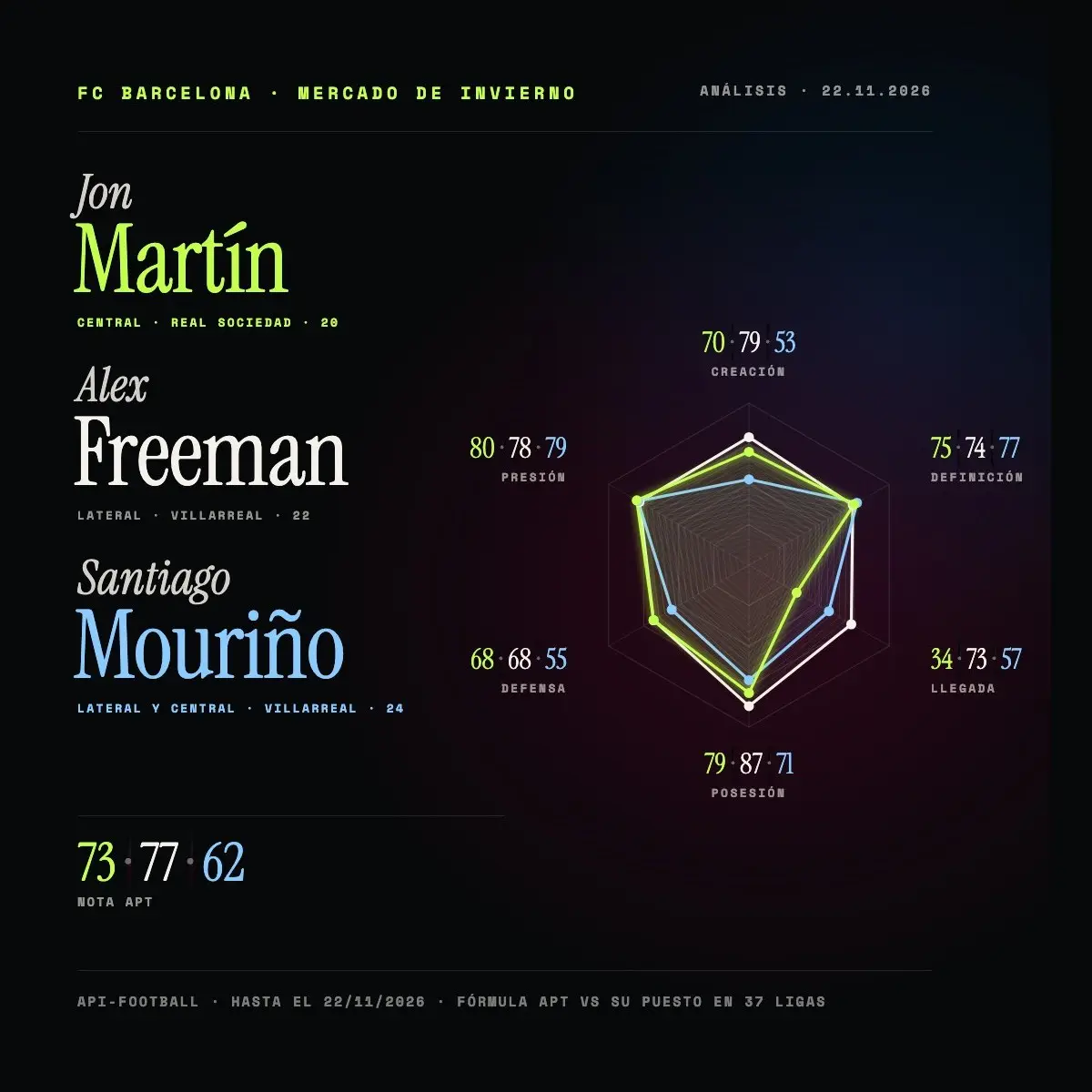
The trend does not stop at England's borders. Jules Koundé was a centre-back at Sevilla and is a right-back at Barça; Xavi Espart, a pivot at La Masia, moved to the flank in the U16 ranks and already wears the first team's number 12. Luis Enrique turns to Warren Zaïre-Emery whenever Achraf Hakimi is missing, and at Real Madrid, Mourinho has used Fede Valverde at right-back in three matches since October. Even Trent was born far from the touchline: in Liverpool's academy he played in midfield and became a full-back to earn a place among the professionals.
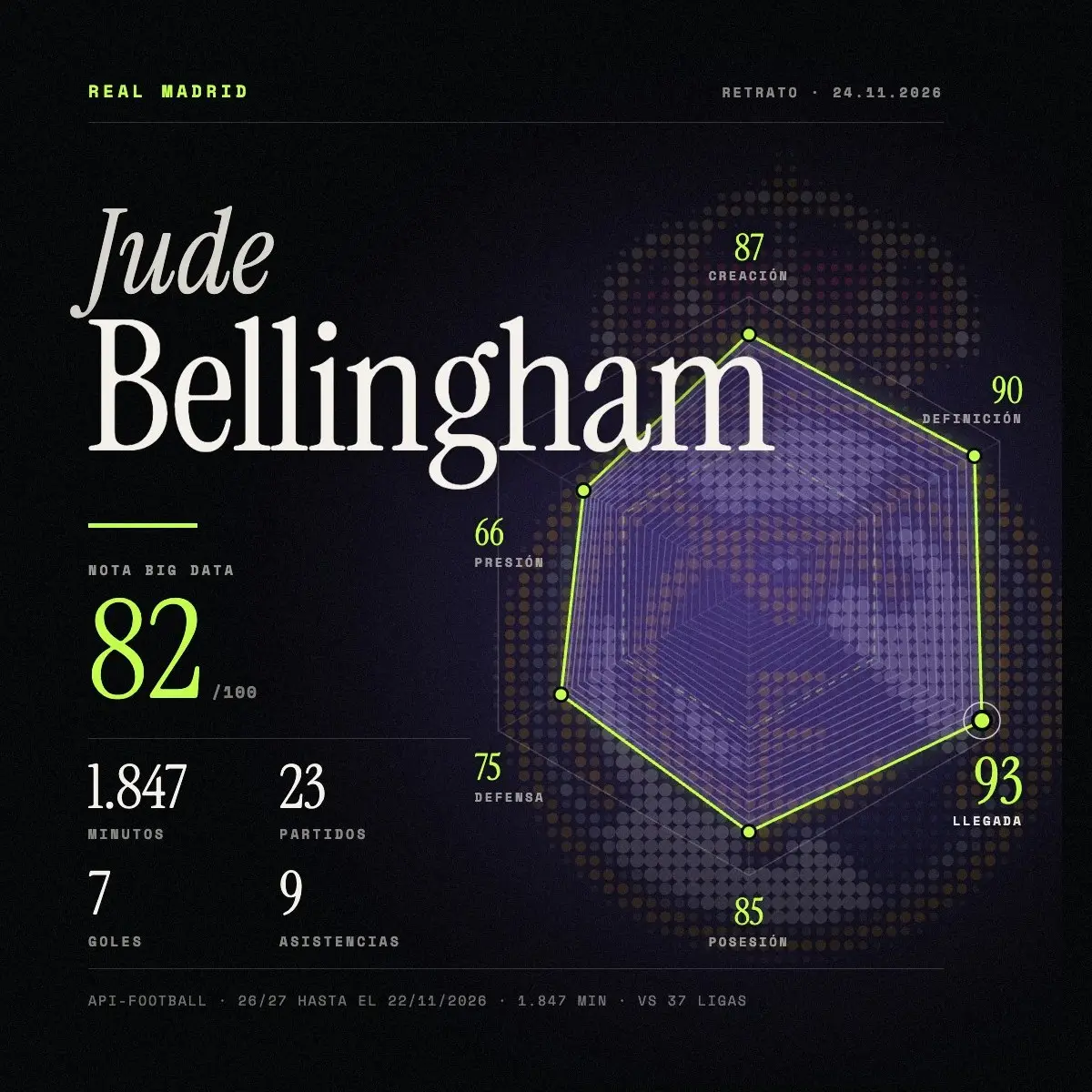
Data and sources: those linked in the text. Valverde's position: API-Football line-ups, 2026/27 season up to 07/11/2026. Each name links to the player's profile on Al Primer Toque, with his Big Data Rating and percentiles.